
One of my favorite things about NaNoWriMo is the “cooler” talk that spawns as the November 1st start date looms on the horizon; the theory crafting, planning vs. pantsing vs. plantsing, and the inevitable doubt that completion is even possible. Interestingly, I’ve met many people who have so much confidence in creating layered, deep characters with rich development, detailed physical descriptions, and full back stories that will (surprisingly, to me anyway) struggle with world-building and long-form plot development.
If there is anything I have confidence in, it’s my ability to pull a fully fleshed-out world out of thin air, with politics, cross-continental conflict, and all kinds of opportunities for story progression and development for the characters I create. Sometimes I start with a big world and sometimes I start with a character, an emotion, or a simple scene; either way, I let the story be built by the context clues already created by the character/scene/setting that I already have.

Using that mentality, here’s three ways to start world building using context clues from an existing character or scene you may already have:
- Character/Scene Aesthetics (Asking ‘Why’)
- Assumptions (Playing ‘Let’s Assume’)
- Applications of conflict
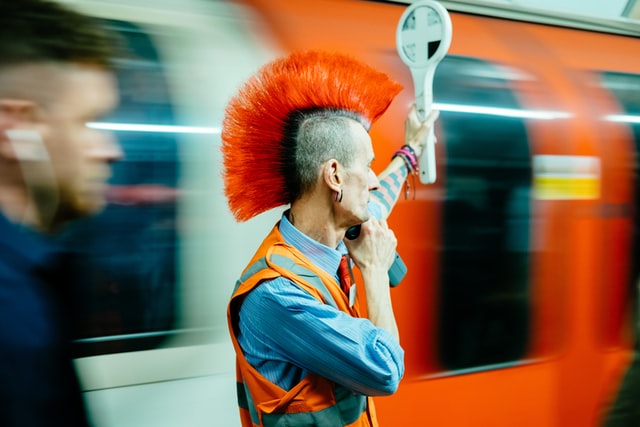
Character/Scene Aesthetics – Writers spend tons of time describing locales, characters and scenes until blue in the face; and, while some writers choose to leave a bit of description to their readers’ imaginations, others focus intensely on a highly specified and exquisitely detailed main character. As a writer, if you have spent all that time designing a character from skin color, hair style, clothing, equipment, weaponry, etc., then go right back to the design elements and ask, “Why?” Maybe you wanted a side shave and Mohawk because you think it’s cool, and that’s great; but what that Mohawk does for you is provide context clues as to greater conflict in the world the character lives in. For example, Mohawks are traditionally a staple in punk and counterculture fashion; is this true for your world? Does your world reward individuality? Would your character be shunned for this kind of self-expression? Is this Mohawk a sign to the world at large of your character’s belonging to a group or organization? If so, is the Mohawk a sign of rank?
On this note, you should also think about your character default settings. That is to say, are your characters, by default, a reflection of your ethnicity or preferred fantasy race (like elves, vampires, etc)? Is that the default for most people in your world? (Guess what’s coming next…) WHY? As a writer that is white and, admittedly, short, I make it a point to include a diverse cast of various shapes and sizes in my stories because the worlds I build are diverse; and, the reason for that is I enjoy living in a diverse world. When you build diverse worlds and worlds that are not assumed to be default “white” or “tall”, you can find a plethora of research opportunities and world building ideas while researching cultural, religious, even personal hygiene practices that may inspire conflict and dialogue in your story that you may have missed by not considering what a non-default or secondary or tertiary “person” looks like in your world. Same thing for fantasy races; maybe you have chosen vampires, lycanthropes and humans…is that it? Why or why not? You have elves, but do you have wood elves, deep elves, drow elves, high elves…what about your own home-brewed race of elves? Are you writing about one race of elves because the focus on one race is the point of a larger story?

This also works for scenes as well. Think about it this way: If you were to wake up in a room and not know where you are or how you got there, you would use the clues from the room around to you give you an idea of how you got there, where you are, if you are safe, and if you are able to escape. On that same note, if you have an idea that involves a specific location, think about the physical design elements of that location and ask yourself the keyword; “Why?” Is this place typical to your world or the city you wish to create? Is this place the only one of its kind and, if so, why? If you are in a park, what’s the season and weather like? Is this weather normal? What kind of flora and fauna populate this area? Is this a manufactured location or naturally occurring? Is this a heavily trafficked area or a rare, secluded spot? How would your character(s) travel to this location? Is that method of travel cost-prohibitive, casual, common, modern? Lots of questions that may seem irrelevant to the content of your scene can and are vital to the development and creation of the world hosting your scene. Remember, these scenes live in an organic sense in a world you are writing about as you are discovering it. Your scene is one piece of a larger whole and, as a writer, you have as much exploration to take while building the world of your story as your eventual readers will when reading.
Assumptions – Can I tell you a secret? I could never build worlds the way I do, as quickly as I can, without this technique. This is how it works: Let’s say you want to write a sci-fi story with a strong female lead. You have the description down pat: she’s a redhead, she’s feisty, sexy, smart, sassy; she’s got an attitude and hates authority figures. But the idea of building a world for her to interact with is overwhelming because there are so many options in the sci-fi genre. Let’s use some Character/Scene Aesthetics to help flesh out her world a little bit: let’s say she is in a modern society where there is equal rights but misogyny galore; she blends in with society visually, but her attitude gets her in trouble; hence, problems with authority. So, let’s start making assumptions about this character. Let’s assume she is put into a position where she is forced to work with a police officer because a friend of hers gets attacked. Let’s also assume she has an attitude with authority because something happened to her in the past where authorities should have helped her but couldn’t or refused.
Now, we can take that information and make more assumptions. Assume what happened to her was recorded, and the authorities couldn’t help her because (let’s assume) she was hurt by someone they were investigating for other crimes and (again, let’s assume) those crimes were for human cybernetics trafficking. Stop there; we just brought in the sci-fi element because we want to build a world in the sci-fi genre and we want to build a world that fits more in the sci-fi category than just fantasy fiction. How can we move forward with more assumptions? Well, let’s go back to using the “why” question whenever our assumptions feel like huge leaps to fill in the details on the back end. Why would our fearless heroine have been attacked and caught on camera by Cybernetics traffickers? Was she being trafficked? Does she have cybernetic parts? Was she targeted for her parts, or was she targeted to have parts added to her by the traffickers? Now that her friend is involved in something, will she be able to change her tune to help the authorities? Will it create a rift between the character and her friend? Are the authorities trustworthy? By making assumptions about situations that the character may have been in but are not a part of the actual/main story, we can create historical references in the world that can be used for sources of conflict, story development, or larger world development.

Applications of Conflict – This one works best if a character has a back story already, or you’ve been following the previous two steps and now you have some conflicts identified that you can use to expand the world you are building. Using Assumptions and Character/Scene Aesthetics can pull conflicts from the simplest sources, like clothing items, character interactions, and other descriptive details. Once compiled, the micro-level conflicts can be used to reflect, build-out, or invent macro-level events that can mirror or emphasize the story’s greater narrative purpose. As an example, if you have a character that was orphaned at a young age due to war, you can take this “war” detail and use it to create a larger setting to develop territorial imperatives, tentative peace agreements, or ongoing violent conflict. Take the time, at this point in the world building, to detail the basics of the war resulting in the character’s familial death. It doesn’t need to necessarily have the same level of detail (micro) that your character and their respective narrative will, but having these details will help in providing perspective and will give you a “background narrative” (macro) that can always be pulled from when there is a gap in the story. Let’s say, with the Orphan above, the war is on-going and is wearing on the country folk. This provides narrative relief on the direct plot and can be used to tie in the theme of the Orphan’s narrative with the world at large, especially if (let’s assume) the Orphan in this story is one of many this war has created. Take it a step further; what would happen (Assumption) if the war ended? How would this directly or indirectly impact your character’s world? Would anything change immediately (Character/Scene Aesthetics)? Why?
The biggest takeaways from the listed methods I use for world building can be summarized as follows: look at what you have already created and ask yourself “why did I develop this character/scene this way?”. Take your creation and make assumptions; create small scenarios for inspiration on how the character can interact with the world hosting the story. Use those feigned character experiences to expand the world in which the scenes take place. The conflicts you invent, the details on the character that can be applied to the world at large, and the work you have already written has all you need to start building the world your characters deserve.

-V. Raylean
 A Portly Bard's Stage